
On-Page SEO vs Off-Page SEO – A Complete Guide for Small Businesses (2025)
Introduction
If you’re running a small business and trying to improve your online presence, chances are you’ve already come across terms like On-Page SEO and Off-Page SEO.
But what do these terms really mean? How do they affect your website ranking? And which one should you focus on more as a small business?
👉 In this guide, we’ll break down the difference between On-Page and Off-Page SEO, why both are important, and how small businesses can use them effectively in 2025.
What is On-Page SEO?
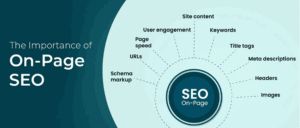
On-Page SEO refers to all the actions you take inside your website to improve its ranking on search engines.
Think of it as making your website search engine friendly.
Key Elements of On-Page SEO
Title Tags & Meta Descriptions
Example: Title → “Best Digital Marketing Services in Varanasi”
Helps both Google and users understand your content.
Keyword Optimization
Using the right keywords naturally in headings, paragraphs, and image alt tags.
Example: “SEO for small businesses” repeated strategically.
High-Quality Content
Informative, engaging, and original content that answers user queries.
Example: Blog posts, guides, FAQs.
URL Structure
Short, clean, and keyword-rich URLs.
Example: yourwebsite.com/local-seo-tips
Internal Linking
Linking to other pages of your own website.
Example: A blog on Local SEO linking to your Contact page.
User Experience (UX)
Mobile-friendly design, fast loading speed, and easy navigation.
What is Off-Page SEO?
Off-Page SEO includes all the activities you do outside your website to improve its authority, trust, and ranking.
Think of it as building your website’s reputation on the internet.
Key Elements of Off-Page SEO
Backlinks (Inbound Links)
Other websites linking to your website.
Example: A popular blog linking to your bakery website in a “Best Cafés in Varanasi” article.
Social Media Signals
Shares, likes, and engagement from platforms like Facebook, Instagram, and LinkedIn.
Local Citations
Listing your business in directories (JustDial, IndiaMart, Yellow Pages).
Guest Posting
Writing blogs for other websites and linking back to your own.
Reviews and Reputation Management
Positive Google reviews help your business rank higher locally.
On-Page SEO vs Off-Page SEO: Key Differences
| Factor | On-Page SEO | Off-Page SEO |
|---|---|---|
| Location of Work | Inside your website | Outside your website |
| Focus | Content, keywords, technical optimization | Backlinks, reviews, authority |
| Control | You have full control | You rely on others (links, mentions, reviews) |
| Example | Writing a blog post optimized with keywords | Getting that blog shared by others |
| Goal | Make website search-engine friendly | Build authority & trust |
👉 Both are important. On-Page SEO ensures Google understands your website, while Off-Page SEO ensures Google trusts your website.
Why On-Page SEO is Important for Small Businesses
Directly in Your Control → You can optimize titles, content, and structure anytime.
Immediate Impact → Google quickly picks up changes on your website.
Foundation for SEO → Without proper on-page SEO, off-page efforts won’t work.
📌 Example: If your bakery website doesn’t have keywords like “best bakery in Varanasi,” no amount of backlinks will help you rank.
Why Off-Page SEO is Important for Small Businesses
Builds Authority → Backlinks act as “votes of confidence.”
Drives Referral Traffic → Links from other websites bring direct visitors.
Boosts Local SEO → Reviews and citations improve city-level rankings.
Increases Trust → A business with good reviews and mentions is trusted more.
📌 Example: If your yoga studio is mentioned by a popular Varanasi lifestyle blogger, your chances of ranking increase significantly.
How Small Businesses Can Use Both (Step-by-Step Strategy)
Step 1: Master On-Page SEO First
Optimize your homepage, service pages, and blog content.
Use tools like Yoast SEO (WordPress) or RankMath.
Write content targeting customer pain points.
Step 2: Build Off-Page Authority
Start by getting listed on Google Business Profile & local directories.
Request customers to leave positive reviews.
Reach out to bloggers for guest posting opportunities.
Share your blogs on social media.
Step 3: Maintain Balance
Think of On-Page SEO as planting the seed and Off-Page SEO as watering it.
Both are needed for long-term growth.
Common Mistakes Small Businesses Make
❌ Overstuffing keywords on a page.
❌ Ignoring meta descriptions.
❌ Buying spammy backlinks.
❌ Relying only on social media without content optimization.
Frequently Asked Questions (FAQs)
Q1: Which is more important — On-Page or Off-Page SEO?
👉 Both are equally important. On-Page is the foundation, Off-Page builds authority.
Q2: Can I rank without backlinks?
👉 Possible for very low-competition keywords, but backlinks are critical for competitive industries.
Q3: How long does Off-Page SEO take to show results?
👉 Usually 3–6 months depending on the quality of backlinks and reviews.
Conclusion
For small businesses in 2025, both On-Page and Off-Page SEO are essential. On-Page SEO helps you create a search-friendly website, while Off-Page SEO builds your authority in the digital world.
👉 If you ignore one, the other won’t deliver full results. A bakery, a yoga studio, a freelancer, or any small business — all need a balanced SEO strategy that combines both.